Scan to contact us

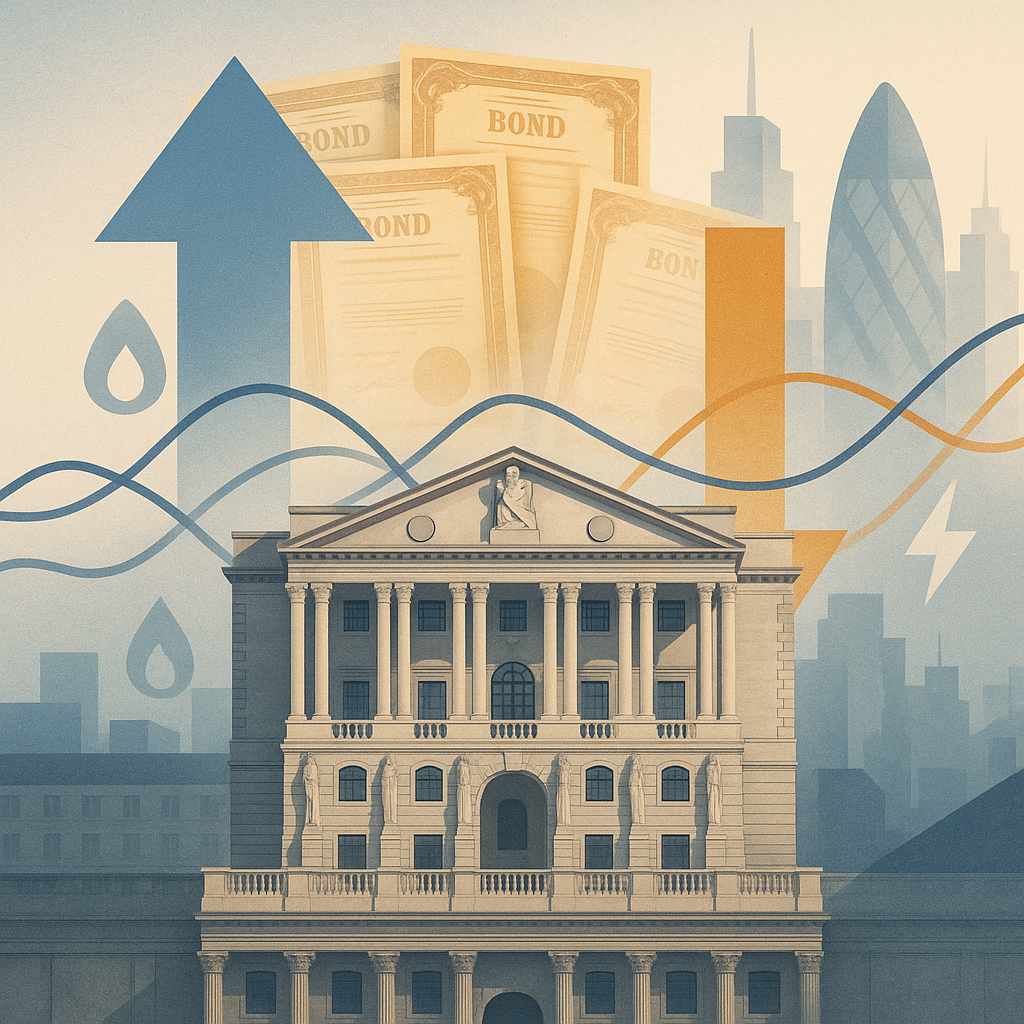
The most significant UK business and finance story today is the continuing impact of the Bank of England’s latest interest rate decision: holding Bank Rate at 3.75% while signalling that a future hike is likely if energy-driven inflation persists, and simultaneously pausing large-scale sales of government bonds built up during quantitative easing.
Although the formal decision was announced on 17 September, markets, lenders and businesses are still digesting its implications, making it the key driver of UK finance coverage this weekend. The Bank’s move shapes the cost of borrowing for households and companies, the pricing of government debt, and expectations for the wider UK economy as autumn begins.
Rates on hold – but a clear warning shot
The Bank of England’s Monetary Policy Committee (MPC) voted to keep the base rate at 3.75% for the sixth consecutive meeting, maintaining the level last set earlier in the year. A majority of six members, including Governor Andrew Bailey, backed the hold, while three voted for an immediate increase to 4%, underlining a live debate within the Bank over how aggressively to respond to renewed price pressures.
Inflation currently stands at around 3.1%, above the Bank’s 2% target and pushed higher in large part by rising energy costs linked to ongoing geopolitical tensions in the Middle East. The Bank has made clear that if these energy price pressures persist, an interest rate rise later in the year is more likely, and financial markets have already begun to price in the possibility of a hike in November.
For households and businesses, the decision provides short-term relief from higher borrowing costs, but the hawkish tone on inflation means mortgages, corporate loans and consumer credit could become more expensive in the months ahead. Lenders are expected to keep a close eye on energy markets and the Bank’s commentary as they update fixed-rate mortgage deals and corporate lending terms.
Pause in quantitative tightening reshapes gilt market
Alongside the interest rate decision, the Bank of England has announced a pause in its annual auctions of government bonds acquired during its quantitative easing programme. Instead of selling large blocks of gilts, the Bank will now unwind its holdings more gradually over an eight-year period.
This shift in strategy has significant implications for government financing and financial markets. By easing the pace of bond sales, the Bank reduces immediate upward pressure on gilt yields, which in turn can lower the interest the government pays on new borrowing in the short term. That offers the Treasury some breathing space at a time when public finances are under strain from higher debt levels and demands for increased spending on public services and infrastructure.
In markets, traders and investors are recalibrating expectations for gilt supply and yields. A slower, more predictable runoff of the Bank’s bond portfolio may help stabilise conditions in the UK government bond market, supporting banks, insurers and pension funds that hold gilts as core assets. However, the longer timeline also means the Bank’s balance sheet will remain larger for years, potentially limiting flexibility if future shocks require rapid monetary policy action.
Growth outlook: cautiously brighter, but fragile
Despite the inflation concerns, the Bank now expects stronger economic growth between July and September, revising its forecast from a modest 0.1% expansion to around 0.4%. That suggests the UK economy is performing slightly better than anticipated over the summer, helped by resilient consumer spending and ongoing investment in sectors such as advanced manufacturing, energy and services.
Yet this improvement is described in cautious terms. Higher energy prices, global interest rate volatility and geopolitical risks continue to weigh on confidence. Business leaders and investors are now focused on whether the brighter near-term data will be strong enough to withstand tighter financial conditions if the Bank ultimately raises rates again to contain inflation.
For companies, particularly in energy-intensive industries and consumer-facing sectors, the combination of firm borrowing costs, elevated input prices and uncertain demand keeps pressure on margins. Many will be reassessing capital spending plans and staffing decisions, balancing the need to invest for growth against the risk of a slower 2027 if policy tightens further.
Housing and consumer finance in the spotlight
The Bank’s decision lands at a sensitive moment for the UK housing market and personal finance. With base rates stuck at 3.75%, the cost of new fixed-rate mortgages remains materially higher than in the low-rate era of the 2010s, and the share of home loans with smaller deposits is at its highest since the financial crisis.
First-time buyers and heavily leveraged households face a difficult balancing act: locking in current rates to protect against future increases, while managing affordability against rising living costs. Any further Bank Rate hike later this year would likely feed quickly into mortgage pricing, intensifying scrutiny of housing policy and support schemes.
On the consumer side, credit card and personal loan rates are expected to remain elevated. That could dampen discretionary spending into the key winter trading period for retailers, even as some economic indicators show signs of resilience. Retailers, hospitality groups and travel businesses will be closely watching the Bank’s language in upcoming speeches and data releases.
Political and policy ramifications
The Bank of England’s stance has immediate political implications. By holding rates but warning of possible future tightening, the Bank underscores the challenge facing ministers who want to support growth while keeping inflation in check and maintaining investor confidence in UK assets.
A slower pace of gilt sales may ease short-term pressure on the government’s debt interest bill, but it does not change the underlying reality of a high stock of public debt. Fiscal choices on tax, spending and investment will remain central to the economic debate heading into the next Budget and beyond, with markets paying close attention to any signals that could affect the UK’s creditworthiness.
Business groups are likely to welcome the stability offered by a hold on rates, even as they press for clarity on future policy. Many will seek targeted measures to ease energy costs, support investment in productivity-enhancing technologies, and strengthen the UK’s competitiveness in areas such as green industry, financial services and advanced manufacturing.
What comes next
The Bank of England’s next decisions will hinge on how energy prices, wage growth and core inflation evolve over the autumn and winter. If price pressures continue to build, a rate hike from 3.75% to 4% or higher would mark a new phase of the post-pandemic cycle, testing the resilience of households, businesses and the housing market.
For now, the Bank’s twin moves – keeping rates steady while pausing large-scale bond sales – represent an attempt to walk a narrow path: defending hard-won progress against inflation, supporting financial stability, and avoiding an abrupt tightening that could derail a fragile recovery. How successfully it navigates that path will define the trajectory of UK business and finance in the months ahead.
A FORWARD-THINKING AGENCY WITH A WORLD OF IDEAS *
A FORWARD-THINKING AGENCY WITH A WORLD OF IDEAS *