Scan to contact us

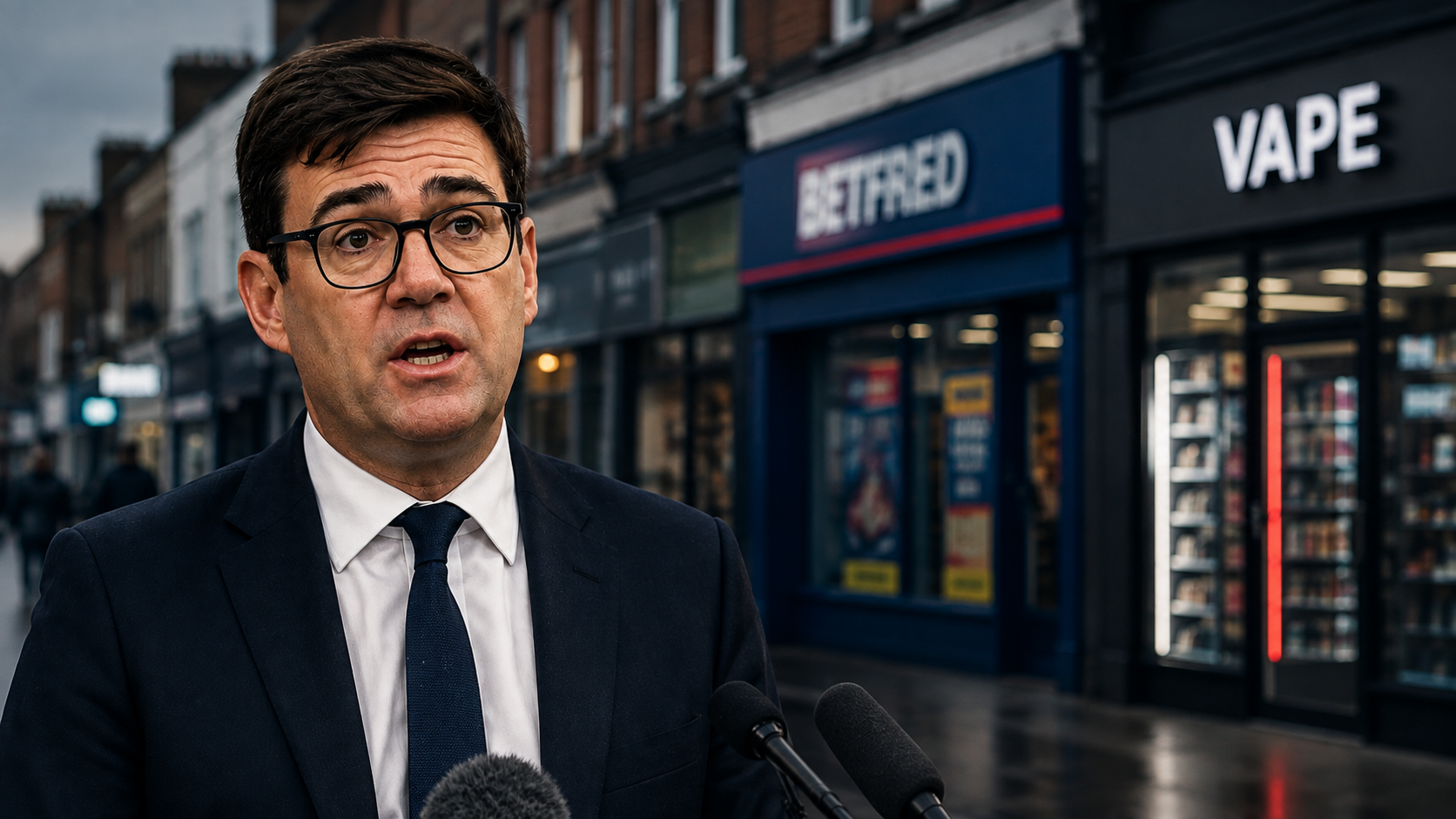
Andy Burnham’s pledge to give councils new powers to block betting shops and vape stores is the most significant UK business story to break so far today, cutting across high street retail, planning policy and a sector already under pressure. The proposed change would reverse a long-standing policy approach and could reshape the economics of two controversial but still sizeable consumer businesses in towns and cities across the country.
The announcement matters because it signals a sharper political intervention in the composition of the British high street, with immediate implications for operators, landlords and local authorities. It also comes amid broader concern about the future of town centres, where vacancy, weak footfall and regulatory change are already forcing businesses to adapt.
High street rules set for overhaul
According to AJ Bell’s latest market news, Burnham has pledged to give councils more powers to block new bookmakers and vape shops in what was described as a “crackdown” on high street expansion. The reported policy would also scrap a Blair-era rule, marking a clear break with the planning framework that has governed the spread of these businesses for years.
The move would be especially significant for vape retailers, which have proliferated rapidly in many parts of the UK, often occupying prominent retail units in secondary high streets. Betting shops are also likely to be affected, as local authorities would gain greater discretion to limit clustering and new openings.
Why it matters for business
For the companies involved, tighter planning controls could make expansion slower, more expensive and more uncertain. For landlords, especially in lower-footfall locations, the change could reduce demand from tenants that have often filled vacant units quickly.
The policy also reflects a wider political shift towards treating high street composition as an economic and social issue, rather than leaving it primarily to market forces. That could have knock-on effects for retail property values, planning disputes and the viability of smaller operators that rely on convenience-led footfall.
Wider market and policy backdrop
The announcement comes at a time when UK business headlines are being shaped by multiple pressures, including consumer weakness, regulatory scrutiny and strains in retail and utilities. Recent coverage from BBC Business and the Guardian has highlighted continued tension in sectors ranging from retail and water to the broader high street economy.
Against that backdrop, Burnham’s intervention stands out because it directly targets the future mix of town centres. If councils are given stronger blocking powers, business groups are likely to argue the move could deter investment, while supporters will frame it as a way to protect local amenities and rebalance high streets.
- Potentially affects new openings for **betting shops** and **vape retailers**.
- Could increase local authority control over high street planning decisions.
- May reduce demand for some retail units in weaker shopping areas.
- Signals a broader political push to reshape town-centre business mix.
The full details of how the policy would be implemented, and whether it would be adopted beyond the initial proposal, will determine how far-reaching the impact becomes. For now, the story is important because it moves a long-running debate about the high street from rhetoric into a possible regulatory shift with real commercial consequences.
A FORWARD-THINKING AGENCY WITH A WORLD OF IDEAS *
A FORWARD-THINKING AGENCY WITH A WORLD OF IDEAS *