Scan to contact us

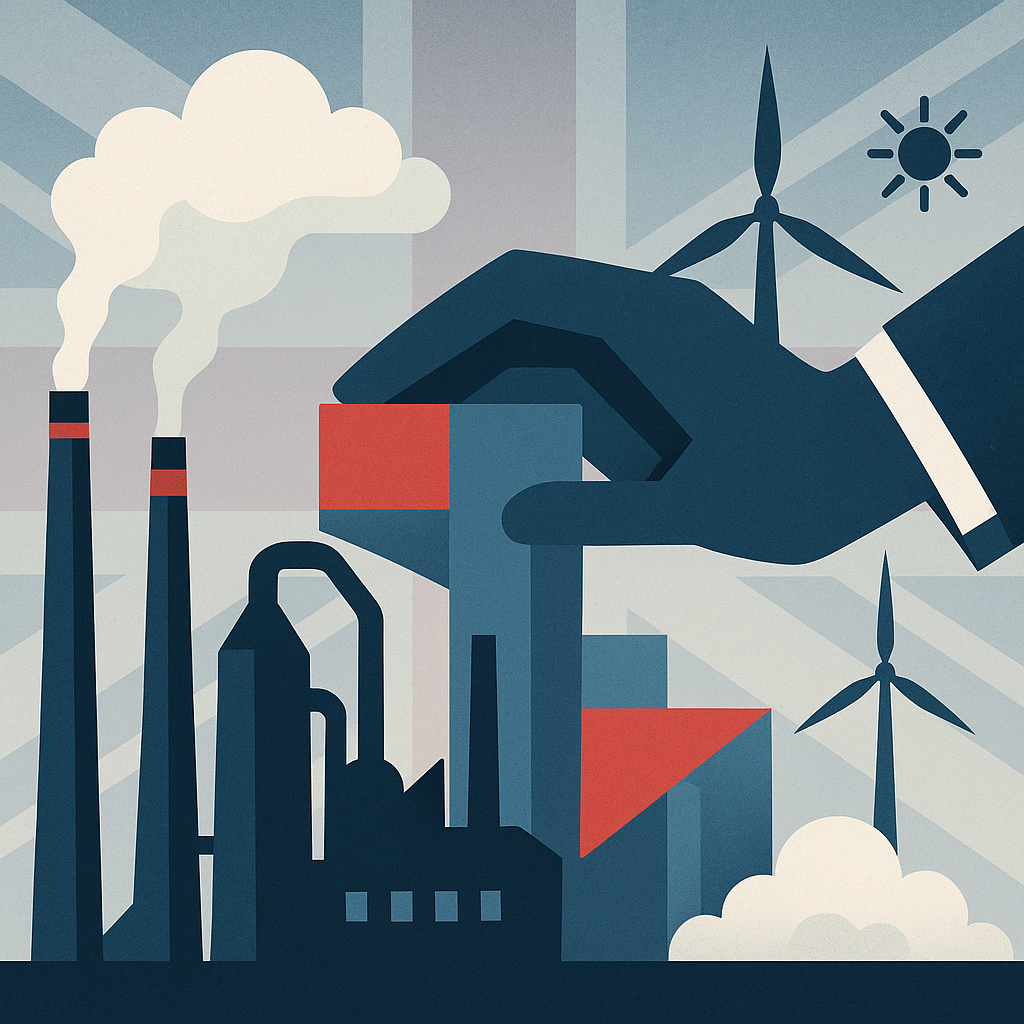
The UK’s nationalisation of British Steel is emerging as the most consequential business and finance development, marking a decisive intervention by the new government in a strategic industry and raising fresh questions about the country’s investment climate and fiscal priorities.
The move, set out through draft legislation prepared for inclusion in the King’s Speech, would see the UK take full control of the country’s only producer of virgin steel from its current owner, Chinese conglomerate Jingye. Officials have reportedly concluded that public ownership is now necessary to secure long-term steel production, protect thousands of jobs, and underpin the decarbonisation of heavy industry. The decision comes against a backdrop of higher-than-expected public borrowing and weaker growth, which the National Institute of Economic and Social Research (NIESR) says has already left the chancellor facing an “impossible” choice over up to £50 billion of future tax rises or spending cuts.
Strategic takeover of a critical industry
British Steel occupies a unique position in the UK economy as the country’s only producer of virgin steel, meaning it turns raw materials such as iron ore into new steel rather than exclusively relying on recycled scrap. The company’s operations underpin supply chains spanning construction, infrastructure, defence and advanced manufacturing, making its continuity a matter of industrial and national strategic concern. Officials have now drawn up legislation that would bring the business into full state ownership, ending its period under Jingye and effectively reversing decades of policy that favoured private control and global investment in heavy industry.
Concerns over the company’s financial stability, required investment in low-carbon technologies, and the geopolitical sensitivities of Chinese ownership are understood to have weighed heavily in the decision to pursue nationalisation. Ministers have faced mounting pressure to set out a credible path to green steel production in the UK, both to meet climate commitments and to prevent core manufacturing activity from migrating abroad. Public ownership is expected to be framed as a route to accelerate investment in cleaner production methods, including electric arc furnaces and hydrogen-based processes, while safeguarding domestic capacity.
Fiscal and political context: a tighter squeeze
The planned nationalisation lands at a moment when the UK’s fiscal position is already under strain. NIESR has warned that higher-than-expected public sector borrowing and weaker economic growth have left the chancellor, Rachel Reeves, with what it describes as an “impossible” choice: raising around £50 billion through tax increases or spending cuts in the forthcoming budget. Bringing a major industrial employer onto the public balance sheet will sharpen scrutiny of how the government intends to fund any restructuring, green investment and ongoing support for the business.
Questions will also be asked about how the takeover sits alongside broader efforts to reassure investors about the UK’s business environment. Analysts and corporate leaders have warned that uncertainty over tax policy and regulatory direction could weigh on investment, particularly in capital-intensive sectors. At the same time, the government is under pressure to demonstrate that it can deliver its growth agenda while maintaining fiscal discipline, a tension likely to be heightened by any significant new commitments to British Steel.
Implications for workers, suppliers and regions
The nationalisation is expected to be welcomed by many workers and local leaders in steelmaking communities who have long called for stronger government guarantees over jobs and future investment. British Steel’s main plants support thousands of direct roles and many more across local supply chains, from raw materials to logistics, engineering and maintenance. Public ownership could provide greater clarity over medium-term plans, including potential investment in new technologies, plant upgrades and skills programmes.
However, trade unions and local authorities are likely to press ministers for detailed assurances on employment levels and capital expenditure, wary of any restructuring that could see jobs consolidated or moved. There will also be close scrutiny of how the state balances environmental commitments with regional economic priorities, particularly in areas that have historically depended on heavy industry for high-quality employment. The government’s ability to articulate a clear industrial strategy for steel – including support for downstream sectors such as automotive, construction and defence – will be central to how the move is judged.
Signals to international investors and trading partners
The decision to take British Steel into public ownership sends complex signals to global investors. On one hand, it underscores the government’s readiness to intervene in sectors deemed strategically vital, particularly where national security, supply chain resilience or climate objectives are at stake. On the other, it may prompt questions about the UK’s openness to foreign ownership of sensitive assets, notably from state-linked or strategically important economies such as China.
Jingye’s exit from British Steel will likely be closely watched in Beijing and other capitals, feeding into wider debates about investment screening and industrial policy across advanced economies. The UK has already tightened oversight of strategic sectors via national security legislation, and the British Steel case could become a touchstone for future decisions involving critical infrastructure and manufacturing. Trading partners will also pay attention to how any state aid or subsidies linked to nationalisation are structured, given the need to align with international rules while supporting domestic industry.
Decarbonisation, competitiveness and the future of UK manufacturing
Beyond ownership, the nationalisation of British Steel will be judged on whether it accelerates the transition to low-carbon steel production and supports the wider competitiveness of UK manufacturing. Steelmaking is one of the most carbon-intensive industrial activities, and governments across Europe have been wrestling with how to fund and de-risk the move to cleaner technologies while preserving jobs and investment. Public control could give ministers more direct influence over technology choices, timelines and partnerships, including potential collaboration with energy companies and research institutions.
Industry analysts will look for clarity on whether nationalisation is a bridge to future private investment – for example through part-privatisations or strategic partnerships – or the start of a longer-term shift towards a more mixed or state-led model in heavy industry. The answer will shape perceptions of the UK’s industrial policy framework at a time when global competition for green manufacturing investment, from batteries to steel and hydrogen, is intensifying. If managed effectively, British Steel could become a flagship of a modernised, low-carbon manufacturing base; if not, it risks reinforcing concerns about productivity, investment and the state’s capacity to run complex businesses.
Market, regulatory and business community reaction
Early reaction from the business community is likely to be cautious, balancing recognition of steel’s strategic importance with questions about execution, cost and precedent. Investors may focus on what the move implies for future government intervention in other sectors, particularly where companies are struggling with debt, energy costs or the demands of decarbonisation. Lenders and rating agencies will monitor the impact on the UK’s fiscal trajectory, especially given NIESR’s warning about the scale of the choices facing the Treasury.
Regulators and policymakers will also need to clarify how British Steel will be governed under state ownership – including board composition, accountability mechanisms and performance targets – to reassure stakeholders that commercial discipline will be maintained. The case could reframe debates about the role of the state in the UK economy, cutting across discussions on infrastructure, utilities and strategic manufacturing. With the King’s Speech expected to set out the legislative path, British Steel’s future is poised to become a central test of the new government’s industrial and fiscal strategy.
A FORWARD-THINKING AGENCY WITH A WORLD OF IDEAS *
A FORWARD-THINKING AGENCY WITH A WORLD OF IDEAS *