Scan to contact us

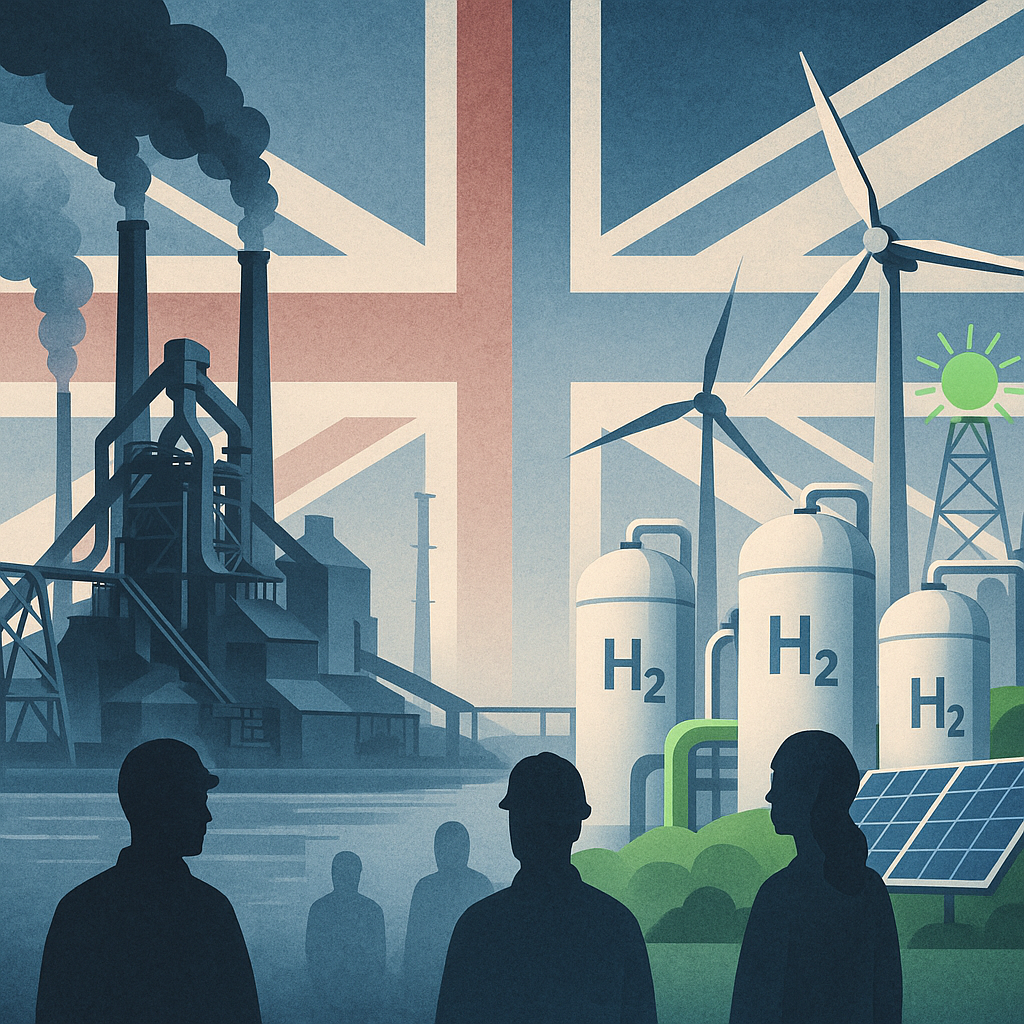
The government is preparing emergency legislation to bring British Steel into public ownership, setting up one of the most consequential tests yet of the UK’s industrial strategy and its net zero ambitions. Officials have drawn up plans for full nationalisation of the country’s only producer of virgin steel from its current owner, China’s Jingye Group, amid mounting concerns over the company’s finances, long-delayed investment in green technology and the strategic risks of relying on a foreign-controlled supplier for a critical material.
Strategic asset at the heart of UK industry
British Steel’s Scunthorpe plant is the UK’s last remaining integrated blast furnace operation capable of producing virgin steel, a core input for construction, defence, infrastructure and advanced manufacturing. Ministers and officials have warned that allowing the asset to close or fall into disorderly insolvency would have severe repercussions for supply chains and could undermine major national infrastructure projects. The company, which Jingye acquired out of insolvency in 2020, employs thousands of workers directly and supports many more jobs across its supply chain, making it one of the largest industrial employers in the Humber region.
Jingye’s stewardship of British Steel has come under scrutiny, with questions over the pace of promised investment and the viability of plans to transition away from carbon-intensive blast furnaces to cleaner technologies such as electric arc furnaces and hydrogen-based steelmaking. Industry figures have raised concerns that delays in committing to a credible decarbonisation pathway risk leaving the UK behind European rivals, where state-backed programmes are accelerating the shift to low-carbon steel.
Nationalisation plan positioned in King’s Speech
According to reports in The Times, officials have drafted legislation that would enable the UK government to take full control of British Steel, with measures expected to be set out in the King’s Speech as part of a broader package on industrial policy and national resilience. The move would represent the most significant state intervention in heavy industry since the renationalisation of parts of the rail network, and would mark a sharp departure from the arm’s-length approach successive governments have preferred for distressed corporate assets.
Policy advisers are understood to be framing the nationalisation as a time-limited measure designed to stabilise the business, safeguard critical production capacity and unlock long-delayed investment in green steel technologies. A state-controlled British Steel would be expected to sit at the centre of the UK’s strategy for decarbonising industry, supporting the country’s legally binding net zero by 2050 target and feeding into low-carbon infrastructure, renewable energy projects and defence programmes.
Balancing net zero and fiscal risk
The proposed nationalisation raises complex questions over how far the state should go in underwriting the heavy costs of industrial decarbonisation. Steelmaking is one of the most carbon-intensive sectors, and shifting from traditional blast furnaces to cleaner processes requires multibillion-pound investment, new energy infrastructure and long-term clarity on carbon pricing and support schemes.
Officials are weighing different models for public ownership, including a direct government holding company, a special purpose vehicle intended for eventual re-privatisation, or a partnership structure that could bring in institutional investors once the asset has been stabilised. Treasury and business department teams are working on options that seek to limit long-term fiscal exposure while still providing the capital and policy certainty needed to move British Steel onto a viable low-carbon footing.
Implications for UK competitiveness
The fate of British Steel is widely seen as a test of whether the UK remains a competitive location for capital-intensive manufacturing in an era of higher energy costs and more activist industrial policy abroad. The United States and European Union have both launched sweeping subsidy programmes for green industry, including packages designed to support low-carbon steel and other strategic materials. In contrast, UK manufacturers have long argued that high industrial electricity prices, fragmented support schemes and policy uncertainty have left them at a disadvantage.
Business leaders warn that failure to secure British Steel’s future would send a damaging signal to global investors about the UK’s willingness to back strategic sectors through structural transitions. At the same time, critics of nationalisation question whether the state is best placed to manage a complex, cyclical and globally exposed business, and argue that public funds might be better directed towards economy-wide frameworks rather than individual corporate rescues.
Political and labour dimensions
The political stakes are high. Steelmaking communities in Lincolnshire and the wider Humber region have already endured years of uncertainty over plant closures, ownership changes and restructuring programmes. Trade unions have pressed for stronger government guarantees on jobs, future investment and plant modernisation, and have welcomed signs that ministers are prepared to intervene directly to secure the business.
Any nationalisation package will need to navigate complex issues around workforce restructuring and skills. Moving to cleaner steelmaking technologies typically requires different engineering and operational capabilities, and unions are expected to push for comprehensive retraining programmes and clear safeguards against short-term job losses as the business is reconfigured.
Relationship with China under scrutiny
Bringing British Steel into public ownership would also have diplomatic ramifications, given Jingye’s status as a Chinese owner of a strategic UK asset. Relations with Beijing over trade, investment and technology have become more sensitive in recent years, and officials are conscious that nationalisation will be examined closely in that broader geopolitical context.
The government is expected to argue that its intervention is driven by industrial strategy and national security considerations, rather than by wider political tensions. However, the episode may prompt renewed debate over the role of foreign ownership in key sectors and the robustness of the UK’s existing national security investment screening regime.
What nationalisation could look like
People familiar with early discussions say officials are exploring a range of tools to support British Steel once in public hands, including targeted capital injections, state-backed guarantees for major projects and access to wider decarbonisation funds. These could be tied to strict milestones on emissions reduction, productivity improvements and governance reforms, with clear expectations that the business will return to private ownership once a sustainable trajectory is established.
- Short-term stabilisation of operations and supply chain relationships
- Investment in replacement or retrofit of existing blast furnaces
- Integration with national hydrogen and renewable energy projects
- Development of long-term offtake agreements with UK infrastructure and defence customers
- Structured path back to private ownership, potentially via a strategic investor or public listing
Analysts caution that even under public ownership British Steel will remain exposed to global steel prices, input cost volatility and competition from lower-cost producers, meaning that industrial policy alone cannot insulate the business from market cycles. The success of nationalisation is likely to hinge on whether the UK can create a broader environment in which low-carbon, high-value steelmaking is commercially viable.
Signal moment for UK industrial policy
For policymakers, the British Steel decision is becoming a defining moment in the evolution of UK industrial strategy. The move towards nationalisation suggests that ministers are prepared to take on greater direct responsibility for critical assets, particularly where they intersect with net zero, national security and regional regeneration priorities.
How the government manages the transition will be watched closely not only by steelworkers and their communities, but also by investors, foreign governments and other sectors contemplating large-scale decarbonisation. If successful, the intervention could provide a template for combining strategic state support with long-term commercial discipline. If mishandled, it risks reinforcing concerns that the UK lacks a coherent, predictable framework for major industrial investment.
A FORWARD-THINKING AGENCY WITH A WORLD OF IDEAS *
A FORWARD-THINKING AGENCY WITH A WORLD OF IDEAS *