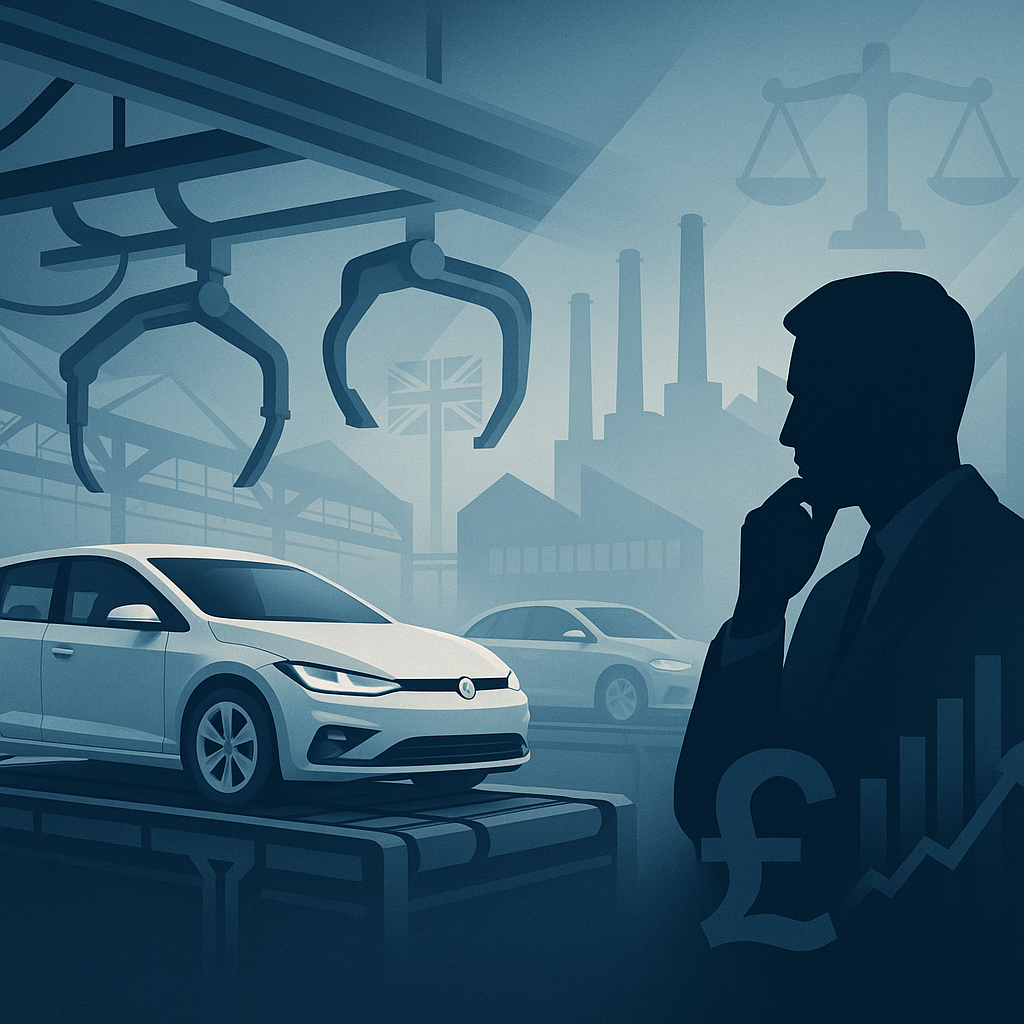
Britain’s car industry is warning that investment in new UK factories is being held back by the government’s electric vehicle sales mandate, in a sign of mounting friction between ministers and one of the country’s most important manufacturing sectors. Industry figures want the rules, which require manufacturers to sell a rising share of EVs each year, to be eased as firms face pressure from weaker demand and the cost of retooling plants.
The warning lands at a sensitive moment for the wider UK economy, with policymakers already wrestling with low growth, elevated borrowing costs and rising uncertainty in global trade and energy markets. For the government, the dispute raises a bigger question: how to keep the UK attractive for long-term industrial investment while still meeting its climate policy targets.
Investment plans on hold
According to industry reporting, carmakers are delaying decisions on British factory investment until the EV mandate is relaxed. The mandate is designed to force annual increases in electric car sales, but manufacturers argue the pace is too demanding given current market conditions and the capital required to shift production lines.
That concern matters because automotive investment is typically planned years ahead. When companies hesitate, the impact can spread beyond assembly plants to suppliers, logistics firms and local economies built around the sector.
Why the issue matters now
The dispute comes as British business confidence remains fragile. Recent data showed UK GDP growth slowed sharply after a strong start to the year, while business surveys have pointed to little confidence that the environment will improve enough to encourage investment over the next 12 months.
At the same time, the global backdrop has worsened. Fresh tensions in the Middle East have unsettled markets and revived inflation concerns, adding another layer of uncertainty for manufacturers deciding whether to commit capital in the UK.
Policy trade-offs for ministers
The government faces a difficult balancing act. Loosening the EV rules could encourage investment and reduce pressure on manufacturers, but it would also risk slowing the transition away from petrol and diesel vehicles.
Keeping the mandate unchanged may support climate goals, but it could deepen industry frustration at a time when the UK is already trying to reassure investors that it is open for business. The outcome may prove important well beyond the car sector, because it will signal how flexible ministers are prepared to be when industrial policy collides with growth objectives.
What to watch next
- Whether ministers open talks with carmakers over the pace of the EV mandate.
- Any sign that manufacturers delay or cancel planned UK plant upgrades.
- New data on investment, factory output and auto sector employment.
- How the government balances industrial competitiveness against its net-zero commitments.
A FORWARD-THINKING AGENCY WITH A WORLD OF IDEAS *
A FORWARD-THINKING AGENCY WITH A WORLD OF IDEAS *