Scan to contact us

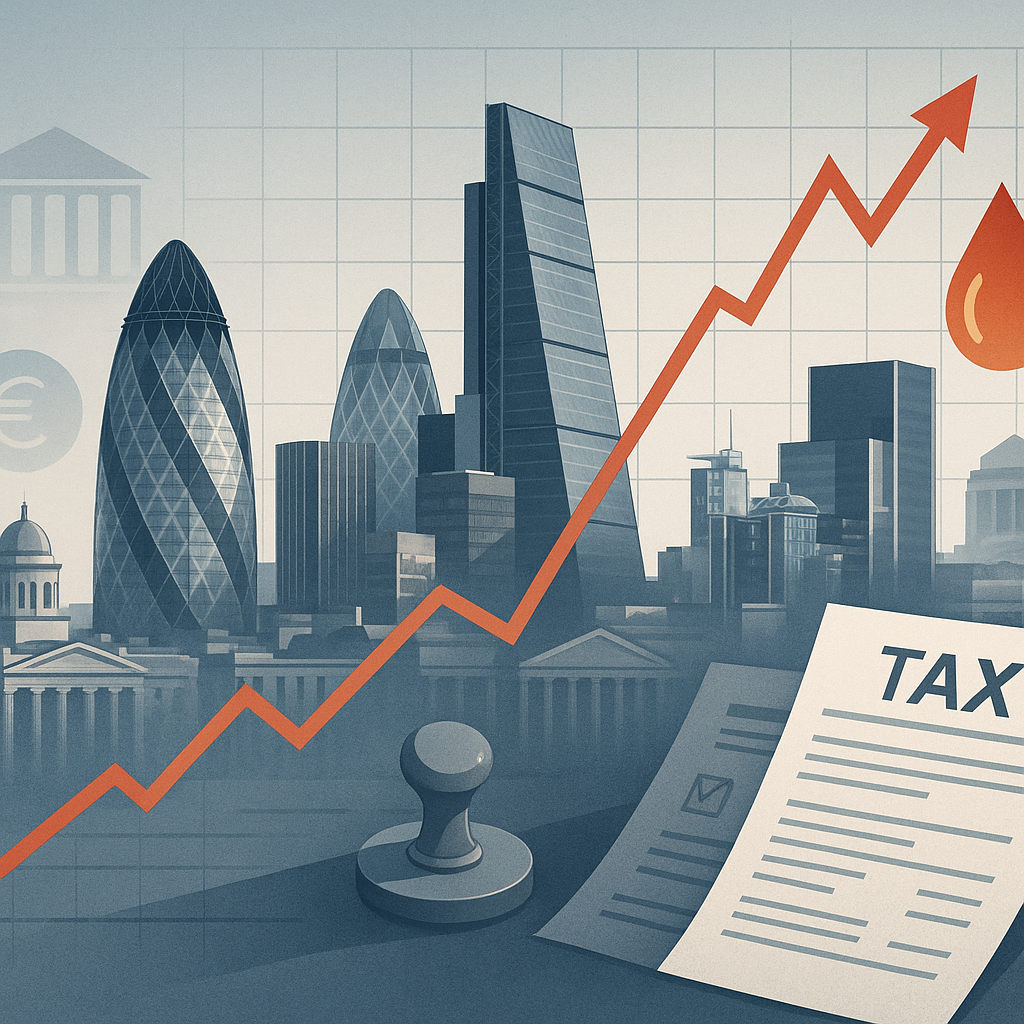
Britain’s business debate today is being shaped by a sharp mix of policy uncertainty, higher energy costs and fresh scrutiny of how the economy will be regulated and taxed. The most significant story is the widening expectation of a major tax and economic-policy reset, as ministers and Labour figures weigh measures that could alter the cost base for small firms, property owners and financial-services employers.
That backdrop is being reinforced by renewed volatility in global energy markets, with oil prices rising after fresh US–Iran fighting, adding to inflationary pressure just as UK policymakers are trying to support growth. Investors are also signalling caution: Citi has downgraded UK equities, even as the FTSE 100 remains ahead for the year.
Policy reset moves to the centre of the UK business outlook
The dominant theme in the UK business landscape is a possible shift in the government’s economic priorities, with reports pointing to stronger support for small-business growth, retraining workers in artificial intelligence and wider reforms to taxation and investment policy. The prospect of changes to business rates, stamp duty and land taxation is particularly significant for SMEs and property-owning companies because these levies directly affect operating costs and investment decisions.
Alongside that, there is growing speculation about a broader rethink of fiscal policy under a potential change of prime minister, which is adding to uncertainty for business leaders trying to plan hiring, capital spending and pricing. Such uncertainty matters because firms tend to delay investment when the rules around tax and regulation appear likely to move.
Energy prices add another layer of pressure
Global events are also feeding into the UK business outlook. Renewed conflict between the US and Iran has pushed oil prices higher, raising the risk of further pressure on transport, manufacturing and consumer-facing businesses through higher input and logistics costs.
For the UK economy, that matters because stronger energy prices can feed into inflation expectations and complicate the path for interest rates. Businesses exposed to fuel, shipping or industrial energy use are likely to feel the effects first.
Financial regulation and technology risk stay in focus
Another important strand in today’s business news is the Bank of England’s move to tighten oversight of technology firms that are critical to the financial system. Banks and payment providers now rely heavily on cloud computing, data services and other external technology, so regulators are increasingly concerned that disruption at one major supplier could spread quickly across the wider economy.
This is a structural issue rather than a one-day market event, but it is becoming more urgent as the financial sector becomes more dependent on a small number of digital infrastructure providers. For investors and lenders, that means operational resilience is now a core risk, not a side issue.
Markets remain cautious despite year-to-date gains
UK equities are starting the day under pressure, with financial bookmakers pointing to a weaker open for the FTSE 100. That caution comes even though the index is still up this year, underlining the tension between solid headline performance and a more fragile economic outlook.
- Oil majors such as BP and Shell have benefited from the rise in crude prices.
- Strategists at Citi have turned less positive on UK equities, downgrading them to underweight.
- Investors are watching the upcoming earnings season for clues about corporate resilience.
For UK business leaders, the message is straightforward: the near-term outlook is being driven less by a single corporate event than by a broader mix of tax uncertainty, higher energy costs and rising regulatory scrutiny. That combination is likely to dominate boardroom planning well beyond today’s market open.
A FORWARD-THINKING AGENCY WITH A WORLD OF IDEAS *
A FORWARD-THINKING AGENCY WITH A WORLD OF IDEAS *